
What Are Invisalign Attachments?
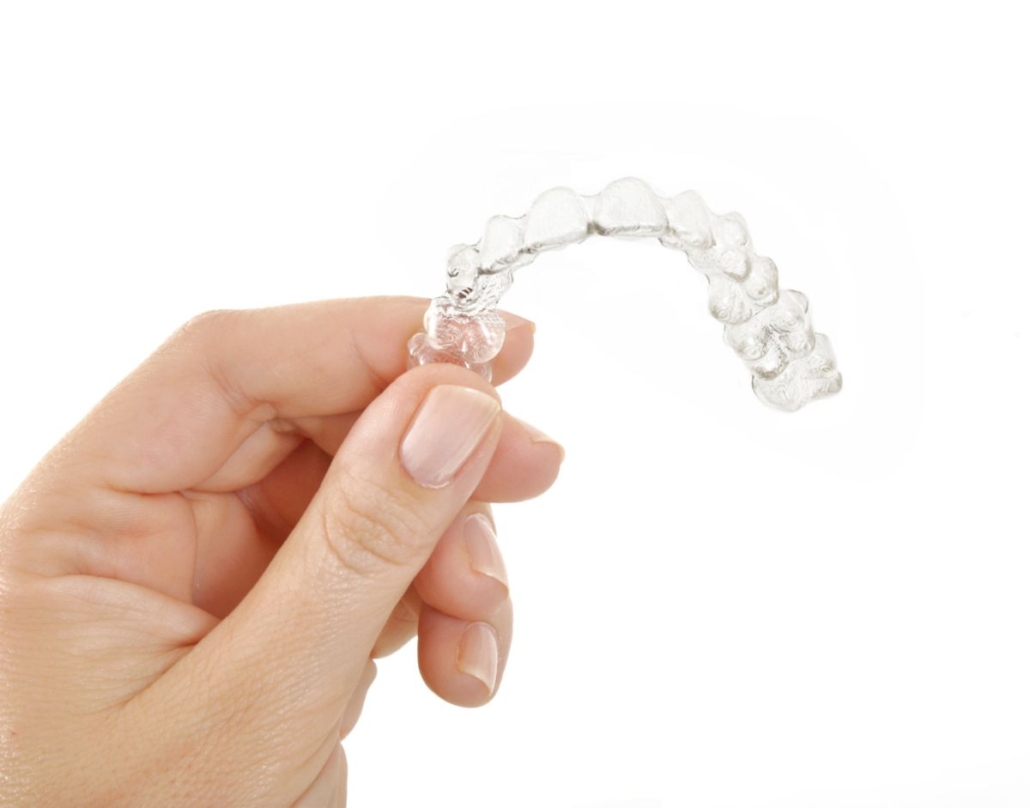
If you’re considering clear aligners, you’ve probably noticed some patients have small bumps on their teeth. Invisalign attachments are tiny tooth-colored composite shapes bonded directly to specific teeth to give your clear aligners something to grip. They act like handles, helping the plastic trays apply precise pressure for movements that aligners alone cannot accomplish. At Surf City Smiles, we use these attachments as part of many Invisalign plans to achieve the kind of results that used to require classic braces.
You may hear them called several different names. Invisalign calls them SmartForce attachments. Some patients refer to them as Invisalign buttons or simply Invisalign bumps on teeth. Whatever the name, they all describe the same thing: small composite resin shapes (dots, rectangles, ovals or ellipsoids) carefully placed on the enamel.
These little shapes are completely temporary. Dr. Carlson or Dr. Nisco will remove them at the end of your treatment, leaving your natural tooth surface intact. The composite material is color-matched to blend with your enamel, so most people barely notice them from a conversational distance.
How Invisalign Attachments Work
Each attachment creates a small geometric surface on your tooth that gives the aligner plastic a defined shape to push against. Without them, a smooth aligner would simply slide over a round tooth. With an attachment in place, the aligner can grip, twist, pull or push in a very specific direction.
Here’s what attachments make possible:
- Rotations of round teeth like canines and premolars, which are notoriously hard to turn
- Extrusions (pulling a tooth down toward the bite line)
- Intrusions (pushing a tooth up into the bone)
- Root torque so the entire tooth tips the right way, not just the crown
- Anchorage so teeth that need to stay put don’t drift while others move
The Placement Visit, Step by Step
Bonding your attachments is quick and comfortable. Here’s how it works at your placement visit:
- Clean and polish each tooth that will receive an attachment.
- Etch the enamel with a mild gel so the composite will bond securely.
- Seat a template aligner that has small bubbles pre-formed in the exact attachment shapes.
- Fill the bubbles with tooth-colored composite resin.
- Cure the composite with a blue light to harden it in seconds.
- Remove the template and polish any rough edges smooth.
The visit often takes 30 to 45 minutes depending on how many attachments your plan includes. There are no shots and no numbing. Most patients leave the same visit wearing their first set of aligners over their new attachments.
Benefits of Invisalign Attachments
These small composite shapes are the reason clear aligners can now treat cases that once required brackets and wires. For many patients at Surf City Smiles, they’re the difference between a great Invisalign result and a compromised one. Here’s why Dr. Carlson and Dr. Nisco rely on them:
- Expanded case range. Attachments let us treat moderate to complex alignment issues with Invisalign, including cases previously limited to braces.
- Better aligner tracking. When trays fit snugly over attachments, they stay seated properly and move teeth on schedule. Poor tracking is one of the main reasons Invisalign treatment stalls, and attachments help prevent it.
- Accurate, reliable tooth movement. Rotations, extrusions and root torque all become achievable with the right attachment shapes placed in the right spots on your teeth.
- Bite correction support. Attachments help with overbite, underbite, crossbite and deep bite correction by anchoring the teeth that need to shift in a specific direction.
- Fewer refinements. When teeth move as planned the first time, you’re less likely to need additional aligner sets at the end of treatment.
- Treatment of rotations and gaps. Closing a gap or rotating a stubborn canine is much more predictable with attachments than without them.
Attachments vs. Buttons vs. Elastics: Key Differences
It’s easy to confuse the small parts of a clear aligner plan. People often use “attachments” and “buttons” interchangeably, but they’re actually different tools that do different jobs. Here’s how they compare:
- Attachments are tooth-colored composite shapes bonded to teeth. They give aligners grip for precise movement and are used in most moderate to complex Invisalign cases. They stay on for your entire active treatment, and your orthodontist removes them at the end.
- Buttons are small metal or clear fixtures bonded to teeth. They act as anchor points for rubber bands and stay on only while those bands are needed. They’re a little more visible than attachments.
- Elastics are rubber bands that stretch between teeth to pull the upper and lower arches into bite alignment. They’re used for overbite, underbite or midline correction, often for months at a time. You take them out yourself at each meal and when brushing.
When Your Case Needs More Than Attachments
Some patients only need attachments. The clear aligners plus the composite shapes are enough to move the teeth into position. Others need attachments plus buttons and elastics, especially when the bite itself needs correction, not just tooth position. Dr. Carlson or Dr. Nisco will map all of this out during your ClinCheck digital planning so you know exactly what’s coming before you ever wear your first aligner.
Who Needs Invisalign Attachments?
Not every Invisalign patient needs attachments. Whether you need them (and how many) depends entirely on what your teeth need to do during treatment.
Cases That Often Need Few or No Attachments
- Mild crowding where teeth only need to shift slightly
- Minor spacing cases closing small gaps
- Touch-up treatment for someone whose teeth have shifted slightly after previous orthodontics
Cases That Typically Need Attachments
- Rotations of canines, premolars or other round teeth
- Bite correction including overbite, underbite, deep bite and crossbite
- Vertical movements like extruding a short tooth or intruding a long one
- Closing larger gaps that require controlled root movement
- Complex multi-tooth movements where tracking is critical
Typical Attachment Counts
Here’s a general sense of what you might see in your plan:
- Mild cases: 1 to 3 attachments
- Moderate cases: 4 to 8 attachments
- Complex cases: 9 or more attachments
Your exact count is determined during ClinCheck, the digital treatment planning software used to design your movements before your aligners are ever manufactured. Both teens and adults benefit from attachment-based plans, and age doesn’t change whether you’re a candidate. As we always say, you are NEVER too old to improve yourself!
Frequently Asked Questions About Invisalign Attachments
Are Invisalign attachments necessary?
Attachments aren’t required for every case, but they are necessary for most moderate to complex Invisalign plans. Without them, aligners can’t accomplish rotations, extrusions or significant bite corrections. If Dr. Carlson or Dr. Nisco recommends attachments, it’s because your teeth need that extra grip to move accurately and on schedule.
How long do Invisalign attachments stay on?
Your attachments stay bonded to your teeth for the duration of your active Invisalign treatment, typically 6 to 24 months depending on case complexity. They’re removed at the end of treatment, before you’re fitted for retainers. The removal is quick and comfortable and leaves your natural enamel intact.
Are Invisalign attachments uncomfortable?
Getting attachments placed is a comfortable experience. There’s no numbing and no cutting of the tooth. You may feel mild tenderness when you first wear aligners over new attachments because the trays fit more snugly, but this usually settles within a day or two as your mouth adjusts to the new fit.
Is 20 attachments a lot for Invisalign?
Twenty attachments is on the higher end and usually indicates a more complex case involving multiple rotations, bite correction or significant tooth repositioning. It’s not unusual for cases that would have traditionally required braces. More attachments means more precise control over your movements, which is a good thing for your final result.
Can people see my attachments and do they stain?
The composite is tooth-colored and designed to blend with your enamel, so most people won’t notice attachments from normal speaking distance. They can pick up staining from coffee, red wine, tea, curry and tobacco if you’re not careful. Rinsing after meals, brushing thoroughly and keeping your aligners clean all help keep attachments looking natural throughout treatment.
What happens if an attachment falls off?
Attachments occasionally pop off, especially if you bite into something hard or pull an aligner off too forcefully. If one comes loose, keep wearing your current aligner and call us right away. In many cases, we can simply re-bond the attachment at a quick comfort visit and keep your treatment on track.
Curious whether Invisalign attachments are part of your treatment plan at Surf City Smiles? Our team would love to walk you through it. Schedule your free consultation today at our Huntington Beach location (10172 Adams Ave) or our Fountain Valley location (17220 Newhope Street, Suite #227), or call us at 714-465-5065 to start your smile story. Good vibes & great smiles are waiting for you.

